Hard Top vs. Soft Top: Which is Right for Your Cobra?
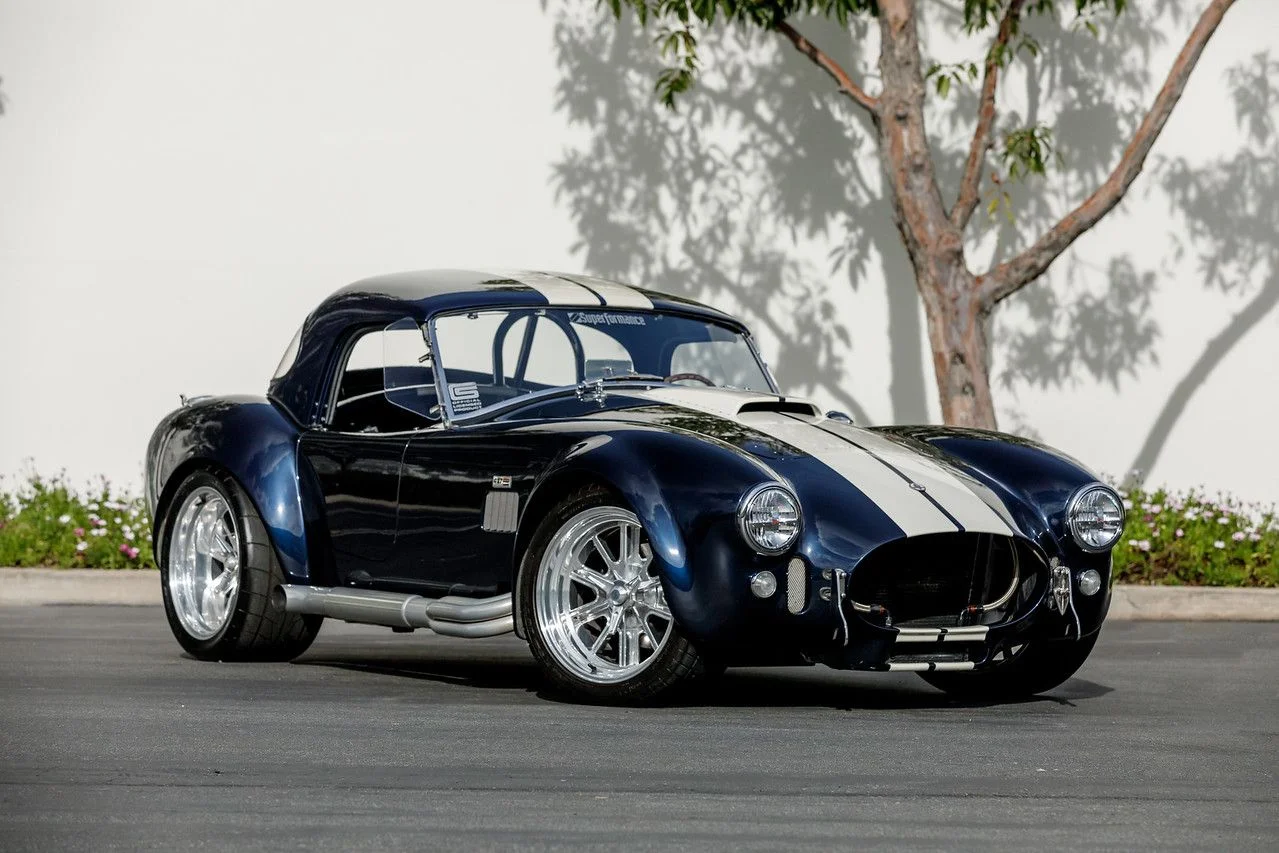
The Shelby Cobra was engineered as an open roadster. Wind in your hair, mechanical symphony behind you, minimal barrier between driver and road. For most Cobra owners, that's the entire point. But the choice between running a soft top, adding a hard top, or going topless isn't as simple as it might seem.
Whether you're considering a Superformance Cobra, an original continuation car, or evaluating which top configuration suits your driving style, the cobra hard top vs soft top decision affects more than just weather protection. It changes the car's character, performance, and practicality in ways worth understanding before you commit.
The Original Intent: Open Roadster Design
Carroll Shelby didn't design the Cobra with a top in mind. The car existed for one purpose: dominate on track and deliver visceral performance on the street. Early competition Cobras ran without tops, and most street examples followed suit.
When weather protection became necessary, AC Cars (the British chassis manufacturer) developed a simple folding soft top. This wasn't a sophisticated convertible mechanism like modern cars use. It was a basic frame with vinyl covering, designed to keep you marginally dry during unexpected rain, not to transform the Cobra into a comfortable all-weather vehicle.
The original soft tops were notoriously difficult to install, leaked air and water, and looked awkward when raised. Owners tolerated them because the alternative was getting soaked. But nobody bought a Cobra for its soft top.
Hard tops came later, developed primarily for racing. Le Mans regulations required closed cockpits for some classes, leading to the famous Daytona Coupe design. Some privateers fitted simpler "bubble" hard tops to standard Cobras for endurance racing. These provided better aerodynamics and structural rigidity compared to soft tops, but they weren't designed for easy removal or street practicality.
Soft Top: The Traditional Cobra Experience
Modern Cobra soft tops have improved significantly from the original designs, but they maintain the same fundamental characteristics.
Weather Protection
A quality soft top keeps most rain off you and your passenger during light showers or unexpected weather. It won't transform your Cobra into an all-season daily driver. These cars weren't designed with door seals, weather stripping, or climate control that make modern convertibles comfortable in bad weather.
Expect some water intrusion around door openings and side curtains. Wind noise is constant at highway speeds. If you're planning to drive frequently in cold or rainy conditions, a Cobra probably isn't the right choice regardless of top configuration.
Installation and Storage
Most soft tops fold and store behind the seats when not in use. Installation typically requires both hands, several minutes, and occasional profanity. It's not a "stop at a red light and raise the top" situation like modern power convertibles offer.
Side curtains (the vinyl windows that close the door openings) store separately and add another layer of complexity. Some owners skip them entirely, accepting that rain will enter from the sides.
When properly stored behind the seats, a folded soft top doesn't significantly impact the car's appearance. You maintain the roadster profile that defines the Cobra's aesthetic.
Performance Impact
A raised soft top adds weight, creates aerodynamic drag, and raises the car's center of gravity. The effect is measurable but modest. You're adding roughly 15-20 pounds and increasing wind resistance noticeably above 60 mph.
The bigger issue is structural rigidity. A soft top provides zero chassis bracing. On spirited drives over rough roads, you may notice increased chassis flex and cowl shake compared to a hard top configuration.
Aesthetics
With the top down and stowed, your Cobra looks exactly as Shelby intended. With the top up, it looks like a Cobra wearing a shower cap. The proportions don't work. The profile loses its aggressive stance.
Most Cobra owners accept this trade-off because they rarely raise the top anyway. It's emergency equipment, not a daily feature.
Cost and Availability
Quality soft tops for Cobras run $1,500-$3,000 depending on materials and manufacturer. Installation is straightforward. Most replica manufacturers offer soft tops as standard or optional equipment, making them readily available.
Hard Top: Performance and Protection Upgrade
Hard tops for Cobras fall into two main categories: Le Mans style (period-correct bubble design) and Fastback style (modern interpretation with flowing roofline).
Weather Protection
A properly fitted hard top provides significantly better weather protection than a soft top. Hard tops seal better, block wind noise more effectively, and don't flap or leak the way soft tops do.
You'll still have air leaks around doors and side windows. Cobras weren't designed with modern weather sealing. But a hard top transforms the car from "hope it doesn't rain" to "I can drive in light rain without significant discomfort."
For Southern California owners, this matters less than it would in Seattle. But for early spring drives or unexpected weather during road trips, a hard top provides peace of mind.
Installation and Storage
This is where hard tops become complicated. Unlike a soft top that folds behind the seats, a hard top is a large fiberglass component that requires two people to lift on and off the car.
Most hard tops attach with quick-release fasteners that allow removal without tools, but the process takes 10-15 minutes and requires somewhere to store a bulky item. You're not swapping between topless and topped at will. You're committing to one configuration for that drive or that season.
Some owners store hard tops on wall-mounted racks in their garage. Others leave them installed for extended periods. Few swap regularly between configurations.
Performance Impact
Hard tops are heavier than soft tops, typically adding 40-60 pounds depending on design and materials. That weight sits high on the chassis, raising the center of gravity slightly.
However, hard tops provide measurable chassis bracing. The rigidity improvement reduces cowl shake and body flex during hard cornering. Some track-focused owners install hard tops specifically for the structural benefits, even when weather protection isn't needed.
Aerodynamics change significantly with a hard top. Fastback designs can actually reduce drag compared to an open roadster at high speeds by smoothing airflow over the cockpit. Le Mans bubble tops create more drag but provide better straight-line stability.
Aesthetics
This is subjective territory. Some enthusiasts love the Le Mans bubble top's period-correct racing aesthetic. Others think it ruins the Cobra's proportions. Fastback hard tops create a more modern, aggressive look that some find appealing and others consider sacrilege.
If you value authenticity and want your Cobra to look exactly like the original roadsters, any hard top deviates from that ideal. If you appreciate the evolution of the design and don't mind reinterpreting the classic formula, hard tops offer a different but still legitimate expression of Cobra performance.
Cost and Availability
Quality hard tops run $6,000-$12,000 depending on manufacturer, style, and materials. Custom fitting may be required, as different Cobra manufacturers have slightly different body dimensions.
Brands like 427 Hardtops, Rod Tops, and several UK manufacturers produce hard tops specifically designed for popular Cobra replicas. Availability has improved significantly in recent years as demand has grown.
The No-Top Option: Pure Cobra
Many Cobra owners run without any top, storing their soft top in the garage and never installing it. This represents the purest expression of what these cars were designed to do.
You accept that rain means you don't drive. You plan road trips around weather forecasts. You embrace the complete open-air experience without compromise.
For Southern California owners with multiple vehicles, this approach makes perfect sense. Your Cobra becomes a fair-weather-only car, which is arguably what it should be anyway.
Which Configuration Makes Sense for You?
Choose a soft top if:
- You want the traditional Cobra aesthetic
- You rarely drive in questionable weather but want emergency rain protection
- You prefer the flexibility to run topless most of the time
- You don't want to store a large fiberglass component
- You're budget-conscious
Choose a hard top if:
- You plan to drive in varied weather conditions more frequently
- You track your car and want the chassis rigidity benefits
- You appreciate the Le Mans racing aesthetic or modern fastback design
- You have garage space to store the top when removed
- You prioritize noise reduction and weather sealing
- You're willing to commit to one configuration for extended periods
Choose no top if:
- You live in a climate with predictable dry weather
- You own other vehicles for daily transportation
- You want the purest possible Cobra experience
- You prioritize weight savings and aesthetics above all else
Making the Most of Your Configuration
Regardless of which option you choose, maximizing the Cobra driving experience requires accepting what these cars are and aren't.
They're not practical all-weather transportation. They're not quiet highway cruisers. They're focused performance machines that deliver engagement and excitement at the cost of comfort and convenience.
A soft top or hard top expands the weather envelope slightly, but neither transforms a Cobra into a daily driver unless you're comfortable with compromises modern cars don't require.
Factory-Trained Cobra Service in Southern California
At Hillbank Motor Corporation, we work with Shelby and Superformance Cobras daily. Our technicians understand how these cars are built, how they perform, and how different configurations affect the ownership experience.
Whether you're considering adding a hard top to your existing Cobra, evaluating which configuration makes sense for a new purchase, or need expert service regardless of your top choice, our Irvine showroom provides the knowledge and parts support Southern California Cobra owners trust.
The cobra hard top vs soft top decision ultimately comes down to how you plan to drive your car. Both options have merit. Neither is objectively better. But understanding the trade-offs helps you choose the configuration that matches your driving style and expectations.